
YouTube is more than just a platform for entertainment—it’s a powerful tool for digital marketing agencies to showcase expertise, attract clients, and grow their brand online. With over 2 billion monthly users, a well-planned YouTube strategy can help your agency reach a highly engaged audience. Here’s how to map out an effective strategy in 7 steps.Generating leads for your services. Building brand authority in digital marketing Educating your audience about trends and tools. Increasing website traffic through video content.
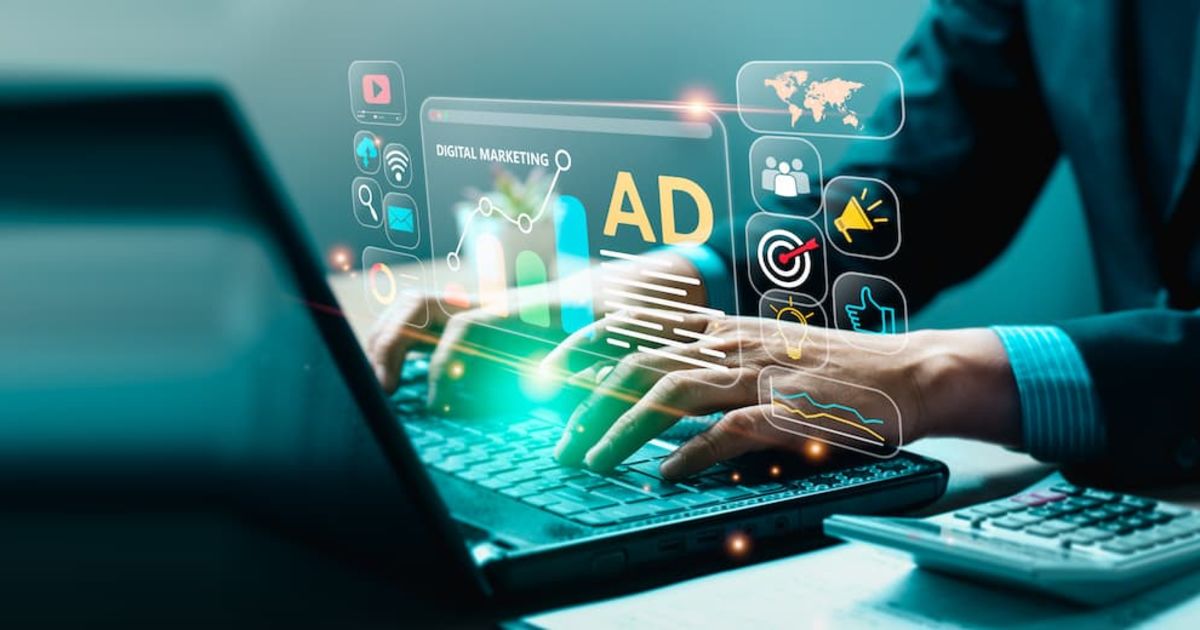
What is Digital Marketing

Learn How Digital Marketing Efforts Drive Business Success in the Modern World
Marketing is the practice of identifying and satisfying customer needs. This is a particularly important task in the business context, as successful marketing efforts can drive leads and conversions. Even though marketing has deep roots in business history and culture, digital marketing is a newer and evolving practice.
Fast forward to the present and digital marketing is as important, if not more so, than traditional marketing methods. Depending on the business there is a growing divide between traditional and digital marketing, while others have found novel ways of bringing the two closer together. Regardless of the approach, it is vital for businesses to plan and execute a viable digital marketing strategy.
What Are the Basics of Digital Marketing?
Digital marketing refers to any marketing methods conducted through electronic devices which utilize some form of a computer, including online marketing efforts conducted on the internet. In the process of conducting digital marketing, a business might leverage websites, search engines, blogs, social media, video, email and similar channels to reach customers.
Unlike traditional marketing—which is static and often referred to as “one-way” communication—digital marketing is an ever-changing, dynamic process. Stated otherwise, customers cannot interact with business through a billboard or print ad, whereas digital marketing provides an avenue for two-way communication between a business and its actual or prospective customers.
These days, screen time is at an all-time high for many people. Digital marketing takes advantage of this reality, promoting business products and services across the internet. In this way, businesses ensure that their marketing efforts are more likely to reach customers, by targeting them where they spend most of their time.
From startups to enterprise businesses, a multifaceted digital marketing approach can lead to significant commercial benefits. Successful digital marketing strategy generally involves a combination of various methods, including online advertising, search engine optimization and marketing, social media marketing and management and content creation, among others.
Are There Different Ways to Conduct Digital Marketing?
Digital marketing is a broad term that encompasses many different channels for promoting business interests to prospective customers. Depending on the business needs and goals, there are countless ways to conduct digital marketing. It is not a cookie-cutter exercise.
That being said, there are several common methods for conducting digital marketing, including:
- Search Engine Optimization (SEO) — SEO is the practice of improving ranking within major search engines to increase online traffic.
- Search Engine Marketing (SEM) — SEM leverages paid online advertising to increase website visibility within search engines. SEM is often used in conjunction with SEO.
- Pay-Per-Click (PPC) — PPC is an online method for advertising where a business only pays for its ads when a person clicks on them.
- Social Media Marketing (SMM) — SMM is the practice of using social media channels to promote business products or services. The use of social media influencers, often referred to as influencer marketing, is prevalent in SMM.
- Email Marketing — Email marketing enables businesses to send branded, promotional content directly to prospective customers via email. The use of automated newsletters is common in this context.
- Affiliate Marketing — Affiliate marketing is a performance-based exercise that enables revenue sharing and pay-per-sale (PPS) compensation within a common network.
- Content Marketing — Content marketing refers to the publishing and distribution of text, video or audio materials to customers online. Blogs, videos and podcasts are common ways for businesses to engage in content marketing.
- Native Advertising — Native advertising involves blending marketing materials into a medium, making the underlying message and marketing purposes equally important. Sponsored content, in which one business posts its own content on a different website, is a common method of native advertising.
There are numerous ways to execute a digital marketing strategy. For most businesses, successful inbound marketing involves the use and application of multiple digital marketing methods.
What Benefits Can I Achieve Through Digital Marketing?

Given the diversity of digital marketing methods, there is a similarly diverse set of benefits available for digitally savvy benefits. On an overarching level, digital marketing enables businesses to reach customers during everyday activities, such as scanning social media, reading online articles, watching videos, etc. When customers are exposed to marketing in this type of natural and regular manner, it can yield a variety of commercial benefits.
More specifically, digital marketing can help businesses achieve any or all of the following benefits:
- Global Reach — Unlike traditional methods, digital marketing is not necessarily bound to a specific geographic area. The internet is available to customers across the globe. This allows businesses to market and sell to customers who live in a different state or country, removing many traditional barriers to entry.
- Low Cost of Entry — To achieve the global reach of digital marketing through traditional channels, there would be a serious price tag attached. On the other hand, certain aspects of digital marketing can be achieved with a small investment of time and resources. For example, even small or startup businesses can create a website, manage social media and publish blogs without breaking the bank.
- Measurable ROI — In order to maximize profits, businesses must carefully evaluate return on investment (ROI). With traditional marketing, ROI can be difficult, sometimes impossible, to measure. On the other hand, digital marketing provides real-time visibility into the effectiveness of each campaign, enabling business leaders to make well-informed decisions to drive revenue and increase profit.
- Improved Targeting — Digital marketing allows businesses to target very specific demographics of potential customers. By engaging customers in a particular geography, industry or social channel, businesses have a much better chance of reaching their target demographic.
- Dynamic Adaptability — Digital marketing strategies are extremely malleable and flexible, enabling businesses to adjust course when needed. Unlike long-term, traditional marketing campaigns, businesses can adjust their digital efforts on the fly, enabling quick pivots when necessary to realize commercial opportunity.
- Immediate Connection — Before making a purchase, modern customers generally conduct online research and evaluate reviews. The first step in this process typically starts with a search engine. In this way, businesses with developed SEO, SEM and PPC strategies can connect immediately with customers.
- Relationship Building — The rise of social media has turned it into a dominant communications platform for many customer demographics. Furthermore, customers increasingly want to interact with businesses on their terms and on their preferred platform. As a result, businesses that engage in effective SMM practices can build longtime and loyal relationships with current and prospective customers.
Overall, businesses of every shape and size can achieve powerful benefits through effective use of digital marketing methods. Furthermore, the cost of digital marketing can be tailored to each specific business, stripping many barriers to entry of traditional methods. With so many benefits available for just about any budget, it makes sense why so many businesses are succeeding with digital marketing efforts.
How Much Will Digital Marketing Cost My Business?
The simple answer is that there is a digital marketing strategy for every budget. The flexibility of digital marketing strategies yields benefits for just about every size of business, from small to large. With such a wide range of methods and strategies, it is not possible to provide a one-size-fits-all price tag for digital marketing.
Instead, it is helpful to examine the digital marketing spend for different levels of business, as small companies will spend less than larger ones. For example:
- Basic Digital Marketing — Startups and small businesses do not generally have a large budget available for digital marketing. These businesses focus on low-cost methods, typically leveraging websites, blogs and social media to drive revenue at a low price point. The cost for basic digital marketing can be several hundred dollars per month.
- Intermediate Digital Marketing — Medium-sized businesses tend to have established revenue streams and the capability to spend more on digital marketing. This is where SEO, SEM, PPC and email marketing start to become prevalent. The cost for intermediate digital marketing can be several thousand dollars per month.
- Advanced Digital Marketing — Large or enterprise businesses will use digital marketing in a comprehensive and often global manner. These businesses tend to have developed strategies across most digital marketing channels. These businesses often spend substantial resources developing a digital marketing strategy across many available channels. The cost for advanced digital marketing can be tens of thousands of dollars per month.
As demonstrated above, the cost of digital marketing varies greatly based on business size, revenue and goals. Smaller companies will often start with a basic strategy and develop intermediate or advanced methods down the road. Ultimately, it is possible for just about every business to create and implement a digital marketing strategy that meets their needs and budget.
What is Graphic Designing
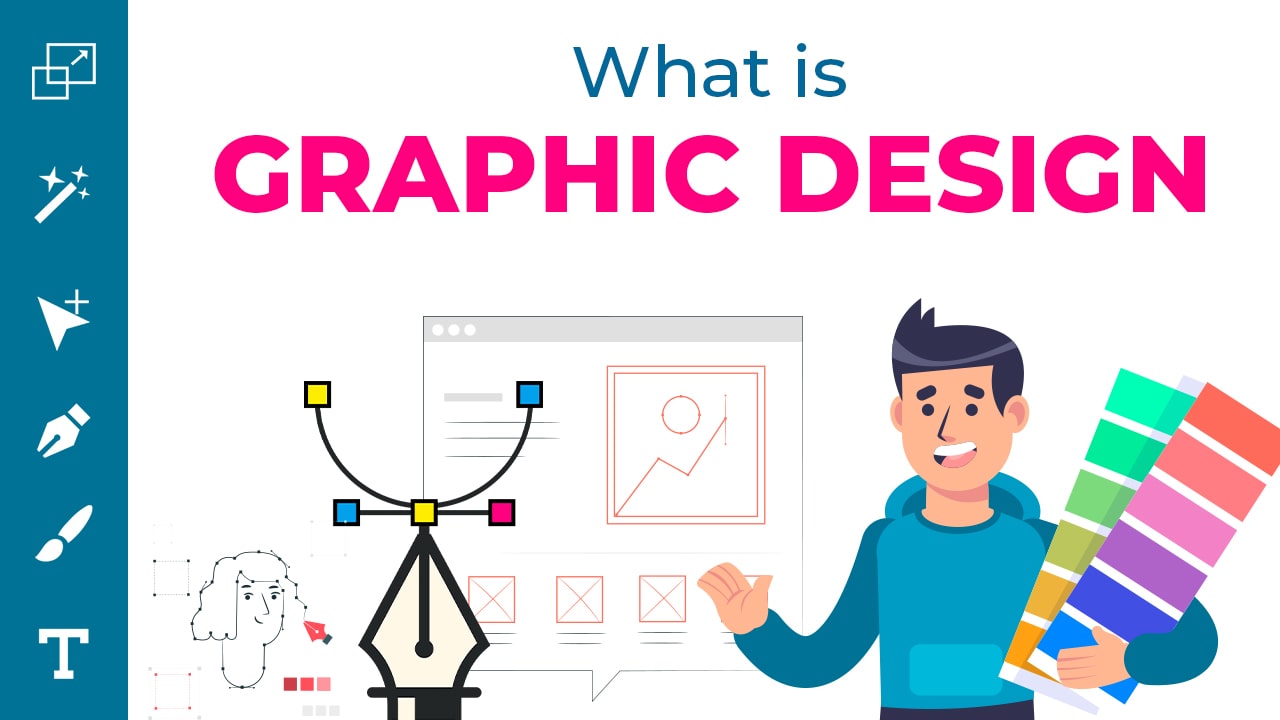
What is Graphic Design?
Graphic design is a craft where professionals create visual content to communicate messages. By applying visual hierarchy and page layout techniques, designers use typography and pictures to meet users’ specific needs and focus on the logic of displaying elements in interactive designs to optimize the user experience. Graphic designer
Table of contents
- What is Graphic Design?
- Graphic Design is about Molding the User Experience Visually
- Graphic Design is Emotional Design
- Learn More about Graphic Design
- Questions related to Graphic Design
Graphic Design is about Molding the User
Experience Visually (Graphic Designer)
Graphic design is an ancient craft, dating back past Egyptian hieroglyphs to at least 17,000-year-old cave paintings. It’s a term that originated in the 1920s’ print industry. It continues to cover a range of activities including logo creation. Graphic design in this sense concerns aesthetic appeal and marketing. Graphic designers attract viewers using images, color and typography. However, graphic designers working in user experience (UX) design must justify stylistic choices regarding, say, image locations and font with a human-centered approach. That means you need to focus on—and seek to empathize the most with—your specific users while you create good-looking designs that maximize usability. Aesthetics must serve a purpose—in UX design we don’t create art for art’s sake. So, graphic designers must branch into visual design. When designing for UX, you should:
- Consider the information architecture of your interactive designs to ensure accessibility for users.
- Leverage graphic design skills to create work that considers the entire user experience, including users’ visual processing abilities.
For instance, if an otherwise pleasing mobile app can’t offer users what they need in several taps, its designer will have failed to marry graphic design to user experience. The scope of graphic design in UX covers creating beautiful designs that users find highly pleasurable, meaningful and usable.
“Design is a solution to a problem. Art is a question to a problem.”
— John Maeda, President of Rhode Island School of Design

Graphic Design is Emotional Design
(Graphic Designer)
Although to work in the digital age means you must design with interactive software, graphic design still revolves around age-old principles. It’s crucial that you strike the right chord with users from their first glance—hence, graphic design’s correspondence with emotional design. As a graphic designer, you should have a firm understanding of color theory and how vital the right choice of color scheme is. Color choices must reflect not only the organization (e.g., blue suits banking) but also users’ expectations (e.g., red for alerts; green for notifications to proceed). You should design with an eye for how elements match the tone (e.g., sans-serif fonts for excitement or happiness). You also need to design for the overall effect, and note how you shape users’ emotions as you guide them from, for instance, a landing page to a call to action. Often, graphic designers are involved in motion design for smaller screens. They will carefully monitor how their works’ aesthetics match their users’ expectations. They can enhance their designs’ usability in a flowing, seamless experience by anticipating the users’ needs and mindsets. With user psychology in mind, it’s important to stay focused on some especially weighty graphic design considerations, namely these:
- Symmetry and Balance (including symmetry types)
- Flow
- Repetition
- Pattern
- The Golden Ratio (i.e., proportions of 1:1.618)
- The Rule of Thirds (i.e., how users’ eyes recognize good layout)
- Typography (encompassing everything from font choice to heading weight)
- Audience Culture (regarding color use—e.g., red as an alert or, in some Eastern cultures, a signal of good fortune—and reading pattern: e.g., left to right in Western cultures)
Overall, your mission—as far as graphic design goes in UX and UI design—is to display information harmoniously. You should ensure that beauty and usability go hand in hand, and therefore your design can discreetly carry your organization’s ideals to your users. When you establish a trustworthy visual presence, you hint to users that you know what they want to do – not just because you’ve arranged aesthetically pleasing elements that are where your users expect to find them, or help them intuit their way around, but because the values which your designs display mirror theirs, too. Your visual content will quickly decide your design’s fate, so be sure not to overlook the slightest trigger that may put users off.
Learn More about Graphic Design
(Graphic Designer)
Take our course, The Ultimate Guide to Visual Design.
What is SEO
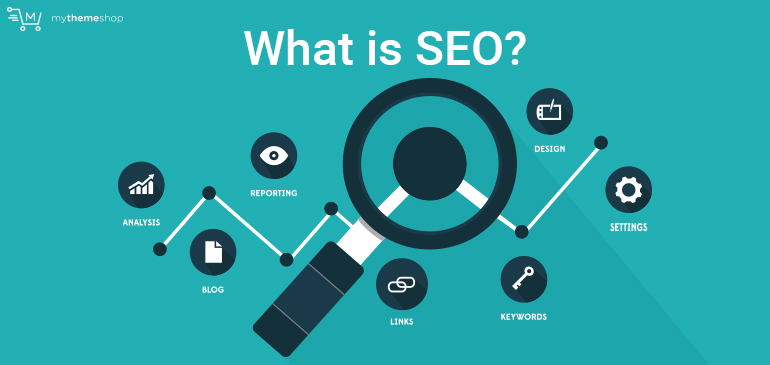
Get started learning the basics of search engine optimization – how SEO works, why it’s important, the different types of SEO and much more.

SEO stands for Search Engine Optimization and helps search engines understand your website’s content and connect it with users by delivering relevant, valuable results based on their search queries.
The goal of SEO is to rank on the first page of search engine results pages (SERPs) for the most relevant and valuable keywords to your target demographic, driving qualified traffic to your site.
SEO is considered a digital marketing practice and can be applied to any website. It helps improve a site’s visibility on search engines like Google and Microsoft Bing. Whether your site promotes products, offers services, or shares expert knowledge on a specific topic, SEO can help drive traffic and increase online visibility.
The better visibility your pages have in search results, the more likely you are to be found and visited.
This introductory guide will explain in more detail what SEO is and what it entails in 2025.
Technology is constantly evolving, which means that websites – and the way they are structured – evolve. So do the devices we use to access search engines.
A web search can be voice activated and a click may be a tap on a mobile phone screen. Even the results we see from our search engine of choice may be summarized by artificial intelligence (AI).
We will explain all these different aspects of SEO as well as provide resources for your continued learning.
Table of contents
- How SEO differs from SEM and PPC
- Why SEO is important
- Types of SEO and specializations
- How does SEO work?
- How SEO evolves
- SEO as a service
- How to learn SEO
How is SEO different from SEM and PPC?
SEM and PPC are two other common terms you will read about often here on Search Engine Land and hear about in the larger search marketing community.
It can also be helpful to distinguish what SEO is from what it is not.
Here, we’ll explain the difference in terminologies, what these abbreviations mean and how they extend to different disciplines.
SEO vs. SEM
SEM stands for search engine marketing – or, as it is more commonly known, search marketing.
Search marketing is a type of digital marketing. It is an umbrella term for the combination of SEO and PPC (pay-per-click, e.g. Google Ads) activities that drive traffic via organic search and paid search, respectively.
So how do SEO and SEM differ? Technically they aren’t different – SEO is simply one-half of SEM:
- SEO: Driving organic results clicks from search engines.
- SEM: Driving organic and paid results clicks from search engines.
- PPC: Driving paid results clicks from search engines.
Here’s the best way to think about SEM, SEO and PPC:
Imagine SEM is a coin. SEO is one side of that coin. PPC is on the flip side.
SEO vs. PPC
PPC: stands for pay-per-click – a type of digital marketing where advertisers are charged whenever one of their ads gets clicked on.
Advertisers bid on specific keywords or phrases that they want their ads to appear for in the search engine results.
When a user searches for one of those keywords or phrases, the advertiser’s ad (paid listing) will appear among the top results.
So again, if we think of search marketing as a coin, SEO and PPC are two sides of the same coin:
- With PPC, the advertiser pays when a search user clicks their paid listing.
- With SEO the search result listing has not been directly paid for, though SEO is sold as a service and the process of optimizing pages and websites takes time and investment, so it is important to understand that organic search isn’t “free.”
Some people have debated “SEO vs. PPC” – which channel is more valuable or has a better return on investment (ROI). However, SEO and PPC are complementary digital marketing channels. Ideally, you should always choose both (as long as your budget allows it).
As we mentioned before, the terms SEM and PPC are used within the industry interchangeably. However, that isn’t the case here on Search Engine Land.
Whenever we mention “SEM,” it will be because we’re referring to both SEO (organic search) and PPC (paid search).
If you’re curious about the history behind how “SEM” came to mean “PPC” at the exclusion of SEO, you can dig deeper in these articles:
- How Wikipedia Turned PPC / Paid Search Into SEM
- Does SEM = SEO + CPC Still Add Up?

Why is SEO important?
SEO is a critical marketing channel.
- Organic search delivers 53% of all website traffic, according to a 2019 BrightEdge study.
- More than 8.5 billion searches happen every day on Google Search and Google owns 91% of the global search engine market.
With such incredible audience reach, there’s no surprise that in turn, the global SEO industry is forecast to reach a staggering $122.11 billion by 2028.
SEO drives real business results for brands, businesses and organizations of all sizes. This is because the act of searching, or the search user interface (be it a typed, voiced or image query format) has become second nature for internet users worldwide, as the primary way to access the information sought, within the sea of billions of webpages (4.3 billion pages on the indexed web, as of September 2024).
Whenever people want to go somewhere, do something, find information, research or buy a product/service – their journey typically begins with a search.
However, search is incredibly fragmented – particularly for consumer-intent activities. Users may search on traditional web search engines (e.g., Google, Microsoft Bing), social platforms (e.g., YouTube, TikTok) or retailer websites (e.g., Amazon).
In fact, last year 56% of U.S. online shoppers started their product search on Amazon, compared to 46% who started on a search engine like Google. Also of note from that same research:
- 37% start on Walmart.
- 25% start on YouTube.
- 20% start on Facebook.
- 19% start on Instagram.
- 19% start on TikTok.

What is BBA
A Bachelor of Business Administration (BBA) degree is an undergraduate academic program that focuses on the principles and practices of business management and administration.
The BBA degree curriculum typically combines core business courses with general education requirements. Students are exposed to a range of subjects that help develop their analytical, problem-solving, communication, and leadership skills. The program may also incorporate case studies, internships, and practical projects to give students hands-on experience in the business world.
What is Business Administration?
At its core, business administration revolves around ensuring the smooth operation, growth, and success of businesses by integrating and optimizing different functions and resources within an organization.
Businesses today have turned into complex structures that require skilled professionals who can coordinate and manage various aspects of a business, such as finance, marketing, operations, human resources, and strategic planning.
Business administration skills are valuable and applicable across a wide range of industries. Virtually every industry, whether profit-oriented or non-profit, requires effective management and coordination of its operations. Some industries that particularly rely on business administration include the corporate sector, healthcare, education, government institutions, consulting, and hospitality and tourism.

How Do You Obtain a BBA?
While many BBA programs are offered with specializations, the admission requirements for these programs are pretty standard. This includes producing high school transcripts or any other previously completed program along with proof of English language proficiency.
Some institutions may have specific prerequisite courses that you need to complete in high school, such as mathematics, English, and social sciences. It’s important to review the specific requirements of the university or college you are interested in to ensure you meet the prerequisites.
While work experience is not typically a requirement for admission into a BBA program in Canada, it can be advantageous for your application and future career prospects. Some universities allow you to transfer credits from previously completed courses and apply them to your BBA program.
What Skills Do I Need for a BBA?
To complete a Bachelor of Business Administration (BBA) program, several essential skills can greatly contribute to your academic and professional success.
Here are some key skills that BBA students should focus on developing and sharpening during their program:
Strong Communication Skills: Develop the ability to articulate ideas, present information clearly, write professional reports and emails and engage in productive discussions.
Critical Thinking and Problem-Solving: Enhance the skills to evaluate complex business situations, identify alternative solutions, and make informed decisions.
Quantitative and Analytical Skills: Develop a solid foundation in quantitative analysis, including basic math, statistics, and financial analysis.
Time Management and Organization: A well-rounded BBA program offers a mix of courses, group work, assignments, and projects. Students should be effective at prioritizing tasks, creating schedules, and managing workload.
Teamwork and Collaboration: Business environments require effective teamwork and collaboration. The BBA program is a great place to enhance interpersonal skills, learn to work well in diverse teams, and actively participate in group projects.
Adaptability and Flexibility: The business landscape is constantly evolving. Cultivate adaptability and a growth mindset to embrace change, learn new concepts, and navigate evolving industry trends.
Leadership and Management Skills: BBA programs often emphasize leadership development. Build leadership skills by taking on leadership roles in student organizations, participating in extracurricular activities, and seeking opportunities to lead and manage projects or teams.
Networking and Relationship Building: Networking is valuable for career growth. Attend industry events, connect with professionals, and build relationships with classmates, alumni, and faculty member.

What Are the Job Prospects for BBA Graduates?
Job prospects for Bachelor of Business Administration (BBA) degree graduates are generally positive due to the versatile skills and knowledge they acquire during their studies. While job prospects can vary based on factors such as location, industry trends, and economic conditions, BBA graduates often find themselves in demand across various sectors.
Here are some potential job titles that BBA graduates will be qualified to apply for:
- Business Analyst
- Marketing Coordinator/Manager
- Financial Analyst
- Human Resources Specialist/Manager
- Operations Manager
- Sales Representative/Manager
- Project Coordinator/Manager
- Supply Chain Analyst/Manager
- Business Development Associate/Manager

What Are the Projected Earnings for BBA Graduates?
The average annual salary for those working in business administration in Canada is $82,342. A fresh BBA graduate can expect to earn around $59,799 per year, while most experienced workers make up to $143,722 per year.
While these are the average numbers for the Canadian market, keep in mind that these can vary depending on various factors, including job role, industry, location, experience, and individual performance. Salaries can also change over time due to economic conditions and market trends.
BBA vs. MBA
The differences between a BBA and an MBA can be explained by focusing on four parameters—level of education, specialization, work experience, and career opportunities.
While a BBA is a foundation-focused undergraduate degree, an MBA is a graduate-level program. Although there are BBA programs that offer specializations, that’s not the norm. But with an MBA program, students must choose their business area of interest.
As mentioned above, there are no work experience requirements for enrolling in a BBA program while that’s not the case with an MBA. Lastly, BBA graduates are usually qualified to apply for entry-level positions whereas those with an MBA have access to senior and leadership-level roles.

Find a Program That Meets Your Needs
Choosing the right BBA degree requires careful consideration of individual preferences, career goals, and specific program offerings. It is important to assess the program’s curriculum, online learning options, available specializations, and experiential learning opportunities to find the BBA program that best suits your interests and aspirations.
Ultimately, by weighing your options, researching programs and industries, and focusing on developing the necessary skills, you can position yourself for a successful career path after completing your BBA degree.
Hello world!
Welcome to WordPress. This is your first post. Edit or delete it, then start writing!